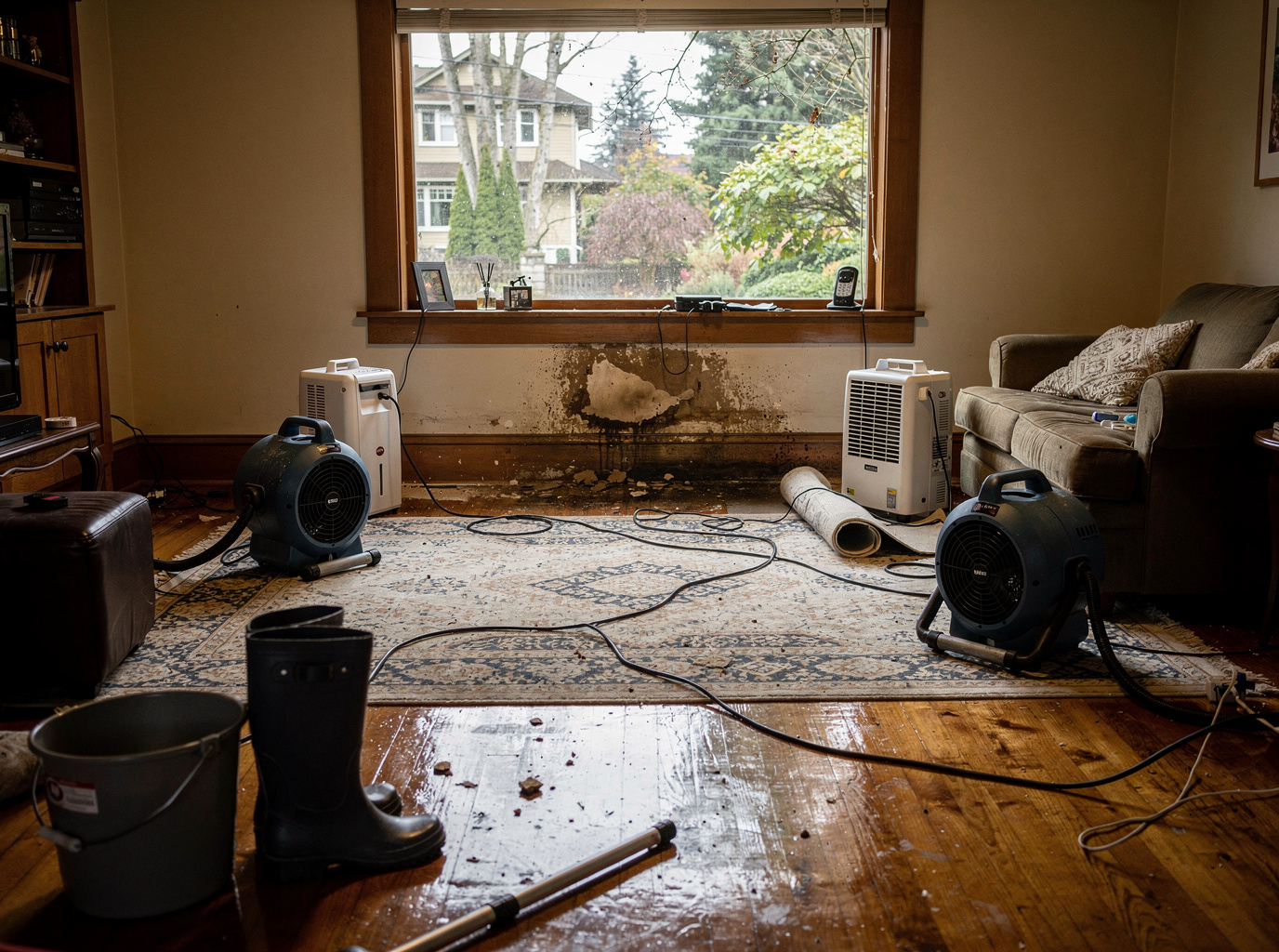
Yarrow Point sits on a narrow peninsula between Lake Washington and Yarrow Bay, where many homes date to the 1950s and 1960s with original plumbing and flat roofs that collect water during the long wet season. Our crew drives the SR 520 corridor from our shop at 309 S Cloverdale St C17 several times a week to handle slab leaks, burst supply lines, and seepage under crawl spaces common on these sloped waterfront lots.
Winter storms drop steady rain for weeks, and the combination of high water table and clay soils around Evergreen Point Road pushes moisture into basements and garages faster than in upland Seattle neighborhoods. We extract standing water, set drying equipment, and open wall cavities on the same day because ferry and bridge traffic can delay return trips from our South Seattle base.
Owners in Yarrow Point often need us to coordinate with Bellevue permitting when damage reaches the shoreline setback. We document moisture readings room by room and work around mature landscaping that cannot be disturbed during extraction on these smaller parcels.
Around 36. Yarrow Point
We regularly work near:
- 📍Yarrow Bay
- 📍Evergreen Point Road
- 📍Lake Washington shoreline
- 📍SR 520 corridor
- 📍NE Points Drive
- 📍Hunts Point border
Water Damage Restoration in 36. Yarrow Point — Local Notes
- •Waterfront lots along Lake Washington have high water tables that keep crawl spaces damp long after rain stops, requiring longer drying times than inland King County homes.
- •Many 1960s ramblers on NE 43rd Street and Points Drive have cast-iron drains that crack where they pass under driveways, sending water into finished lower levels.
- •Access for equipment trucks is tight on narrow private drives off Evergreen Point Road, so we stage dehumidifiers and air movers by hand to avoid damaging landscaping.
- •Dry summers leave soil cracked around foundations; the first heavy fall rains then funnel water straight into those gaps before homeowners notice.