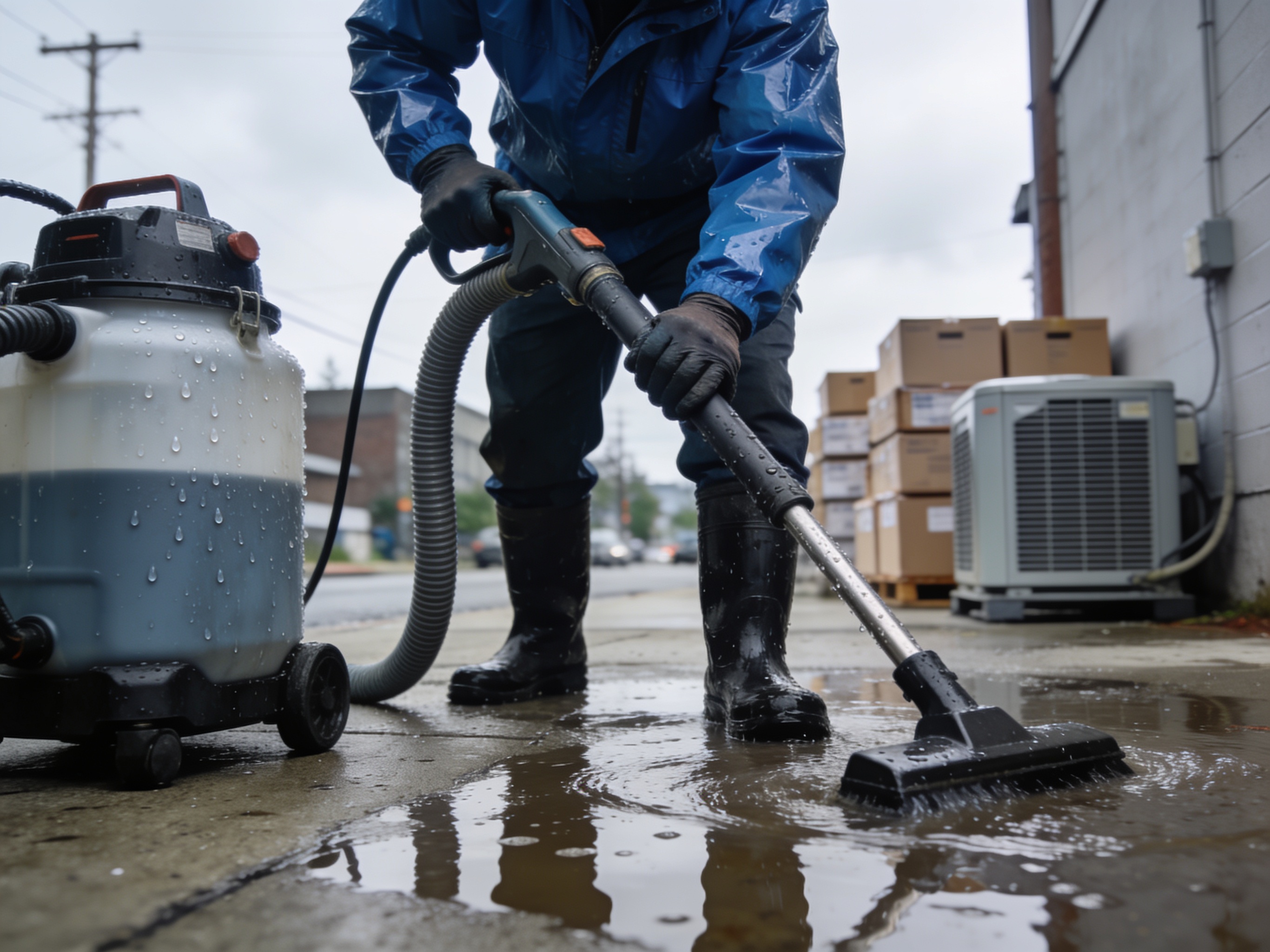
Seattle's frequent wet winters send heavy runoff down the hills of Queen Anne and Capitol Hill, pushing water into older crawl spaces and basements built before modern drainage codes. Crews arrive with truck-mounted extractors and moisture meters to pull standing water from hardwood subfloors and concrete slabs common in 1920s–1950s homes in Ballard and Fremont. Hidden pockets behind plaster walls or under built-up kitchen floors in University District rentals often require targeted demolition to prevent mold that thrives in the region's persistent overcast humidity.
Edge cases include storm drains backing up near Discovery Park or Pike Place Market during king tides, where salt-laden water corrodes copper lines faster than fresh rainwater. Technicians document affected materials for King County insurance adjusters and use air movers sized for the tight stairwells typical of Belltown apartments. Work stops short of full reconstruction but always includes removal of saturated carpet padding and insulation to meet current ventilation standards in West Seattle split-levels.
Dry summers reduce volume but increase calls from cracked supply lines in University District sorority houses after months of expansion and contraction. Every job starts with a walk-through that notes soil saturation levels around the foundation, since clay-heavy ground in parts of Kirkland-adjacent neighborhoods holds moisture longer and slows natural drying.
Technician insight
In Seattle the thing that catches most people out with Emergency Water Removal is how quickly water travels under the tongue-and-groove floors of 1920s homes in Fremont and Ballard; once it reaches the joists the job doubles because you have to pull baseboards from two stories instead of one.
Queen Anne Basement After Heavy Rain
Water entered through a foundation crack during a November storm and reached the laundry room in a 1938 home. Meters showed saturation extending under the adjacent hardwood. Extraction and targeted drying prevented mold growth that would have spread to the upstairs bedrooms.
Emergency Water Removal Services We Offer
✓Flooded Basement Extraction
Truck-mounted pumps remove standing water from below-grade spaces common in Capitol Hill and Queen Anne homes after heavy winter rain.
✓Burst Pipe Water Removal
Targeted extraction around copper or galvanized lines that fail in older Fremont and Ballard houses during freeze-thaw cycles.
✓Appliance Leak Cleanup
Rapid removal of water from washing machines or water heaters that leak onto hardwood floors in University District rentals.
✓Storm Runoff Extraction
Clearing water that enters through windows or doors during Seattle's wet-season downpours in West Seattle and Belltown.
✓Crawl Space Water Removal
Pumping and drying of low-access areas beneath 1920s homes in neighborhoods where poor grading directs rain toward foundations.
Emergency Water Removal Cost in Seattle, WA
| Service | Typical Range | What Affects It |
|---|---|---|
| Single-room extraction | $350–$650 | Higher when hardwood or plaster must be removed for access. |
| Basement or crawl space job | $600–$1,200 | Depends on depth of water and pump runtime needed. |
| Multi-room apartment | $800–$1,800 | Tight layouts in Belltown increase labor time. |
| Equipment rental per day | $150–$300 | After initial extraction for ongoing drying. |
Ranges are typical for Seattle, WA and confirmed with an exact written quote before any work starts.
How it works
- 1
Arrival and Assessment
Technician arrives within the service window, locates the water source, and maps moisture with meters in affected rooms.
- 2
Standing Water Extraction
Pumps and wands pull bulk water from floors, carpets, and subfloors while protecting unaffected areas.
- 3
Targeted Drying Setup
Air movers and dehumidifiers are placed based on Seattle home construction types and left to run with daily checks.
- 4
Final Moisture Verification
Readings confirm materials are dry before equipment removal and handoff to restoration crews.
Pricing
Pricing varies by water volume, access difficulty, and number of affected rooms; most emergency calls fall in the mid-hundreds to low-thousands range.