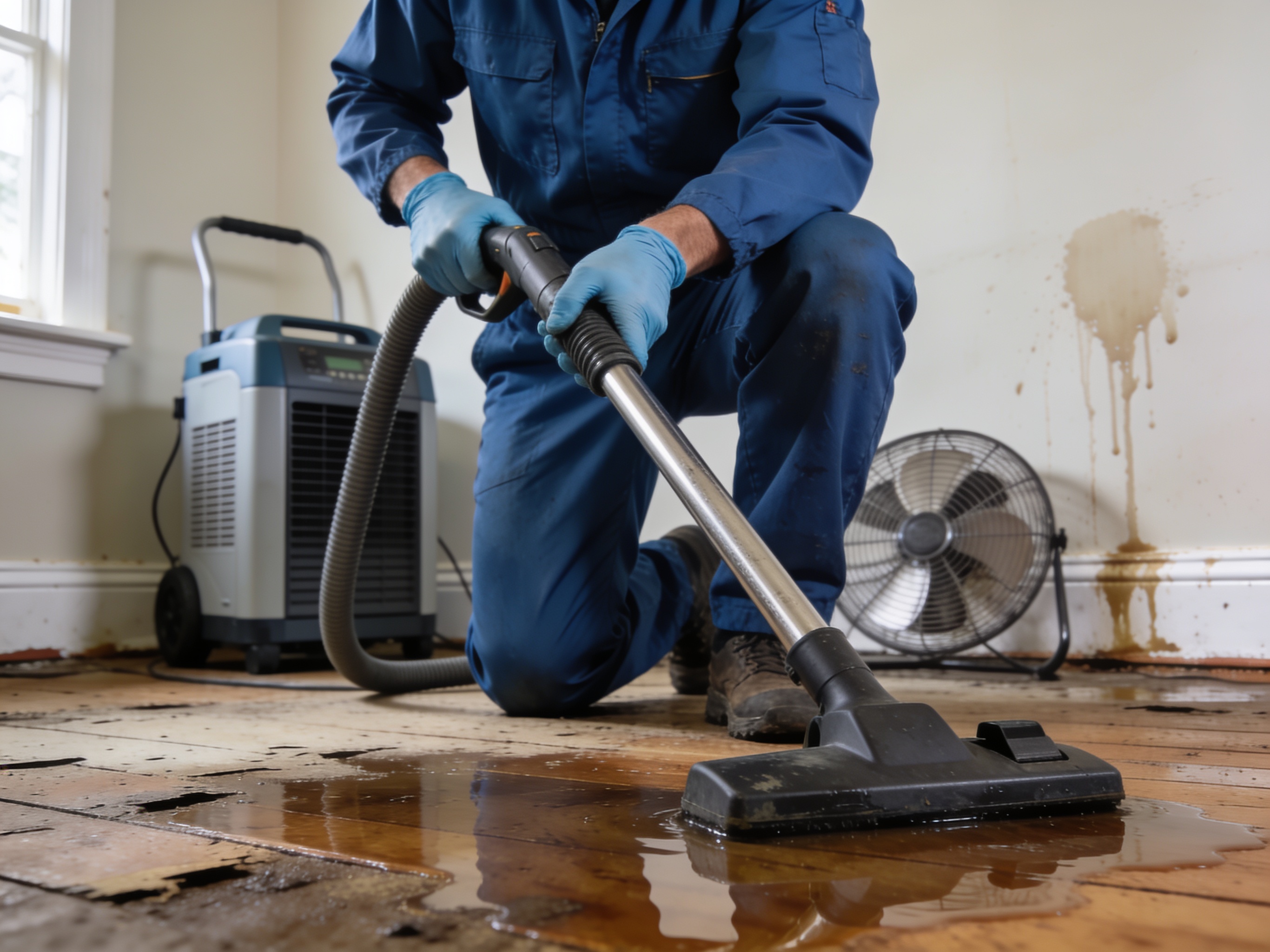
Seattle's frequent overcast skies and mild wet winters send steady rain into older homes in Queen Anne and Capitol Hill where many properties still have original plumbing from the 1920s. When a supply line bursts under a kitchen floor, water travels along joists and pools in the basement because the clay-heavy soils around Beacon Hill hold moisture longer than sandy ground near Discovery Park. Technicians must pull carpet pads within hours or risk black mold growth that spreads through the closed-in spaces common in these Craftsman and Tudor houses.
Dry summers do not eliminate risk. Irrigation leaks around University District rentals and sudden appliance failures in Belltown high-rises create hidden saturation behind drywall that only shows up weeks later when the smell reaches the hallway. Restoration crews use moisture meters on both sides of shared walls because sound transmission in these concrete-and-wood buildings carries water farther than in newer suburban construction. Proper airflow setup prevents warping of original fir floors that cannot be replaced without matching scarce reclaimed stock.
King County code requires permits for any work that affects structural members, so crews document every cut joist in Fremont row houses before beginning rebuild. Homeowners in West Seattle often face additional challenges when water migrates downhill toward the Duwamish, pulling in silt that clogs extraction equipment and extends drying times. Technicians schedule around the 8am–6pm weekday window and Saturday 9am–2pm slot to keep noise complaints low in dense blocks near Pike Place Market.
Nearby cities like Bellevue and Kirkland see similar winter patterns but with newer stock that dries faster; Tacoma jobs frequently involve older waterfront homes where salt air accelerates corrosion on metal ductwork after a flood. The address at 309 S Cloverdale St C17 serves as the dispatch point for rapid response across these zones without relying on generic regional claims.
Technician insight
In Seattle the thing that catches most people out with water damage restoration is how quickly water travels along the sloped lots in Queen Anne and West Seattle during a winter rain event, soaking the back side of lath-and-plaster walls that look dry from the room side.
Hidden leak behind kitchen wall
A Fremont homeowner noticed a musty smell after weeks of steady rain. Inspection found a slow supply-line drip that had saturated the subfloor and traveled into the shared wall with the neighboring unit. Crews extracted water, dried the cavity for six days, and replaced the affected plaster while keeping the original fir trim intact.
Water Damage Restoration Service Services We Offer
✓Emergency Water Extraction
Rapid removal of standing water from basements and crawl spaces in Capitol Hill and Ballard homes before mold sets in during wet winter months.
✓Structural Drying and Dehumidification
Targeted drying of joists, subfloors and walls using equipment sized for Seattle's humid winters to prevent warping in older Queen Anne properties.
✓Mold Remediation After Water Intrusion
Containment and removal of mold colonies that develop behind drywall in Fremont and University District rentals following undetected leaks.
✓Sewage and Category 3 Cleanup
Safe extraction and disinfection of contaminated water from West Seattle and Belltown properties where stormwater backups reach living spaces.
✓Content Cleaning and Pack-Out
Removal, cleaning and storage of salvageable belongings from flooded kitchens and living areas in dense Capitol Hill apartments.
Water Damage Restoration Service Cost in Seattle, WA
| Service | Typical Range | What Affects It |
|---|---|---|
| Small area extraction and drying | $800–$1,800 | Single room under 200 sq ft with no hidden wall damage |
| Whole-floor water removal | $2,200–$4,500 | Multiple rooms plus crawl space work in older homes |
| Category 3 sewage cleanup | $3,500–$7,000 | Includes containment and disposal in King County |
| Content pack-out and cleaning | $600–$1,400 | Varies by volume and item fragility |
Ranges are typical for Seattle, WA and confirmed with an exact written quote before any work starts.
How it works
- 1
On-Site Assessment
Technician inspects all affected rooms, measures moisture in walls and floors, and identifies hidden paths water took through the structure.
- 2
Water Removal
Pumps and extractors pull standing water while protecting original fir floors common in Seattle neighborhoods.
- 3
Drying And Monitoring
Air movers and dehumidifiers run until readings confirm the structure is dry, with daily checks to adjust equipment.
- 4
Restoration And Repairs
Replace damaged drywall, flooring and trim, matching materials to the age and style of the home.
Pricing
Upfront quotes after inspection; final cost depends on extent of saturation and access.