2026-11-08 · Evan Brooks
Drying Out After Pipe Bursts in Fremont and Wallingford
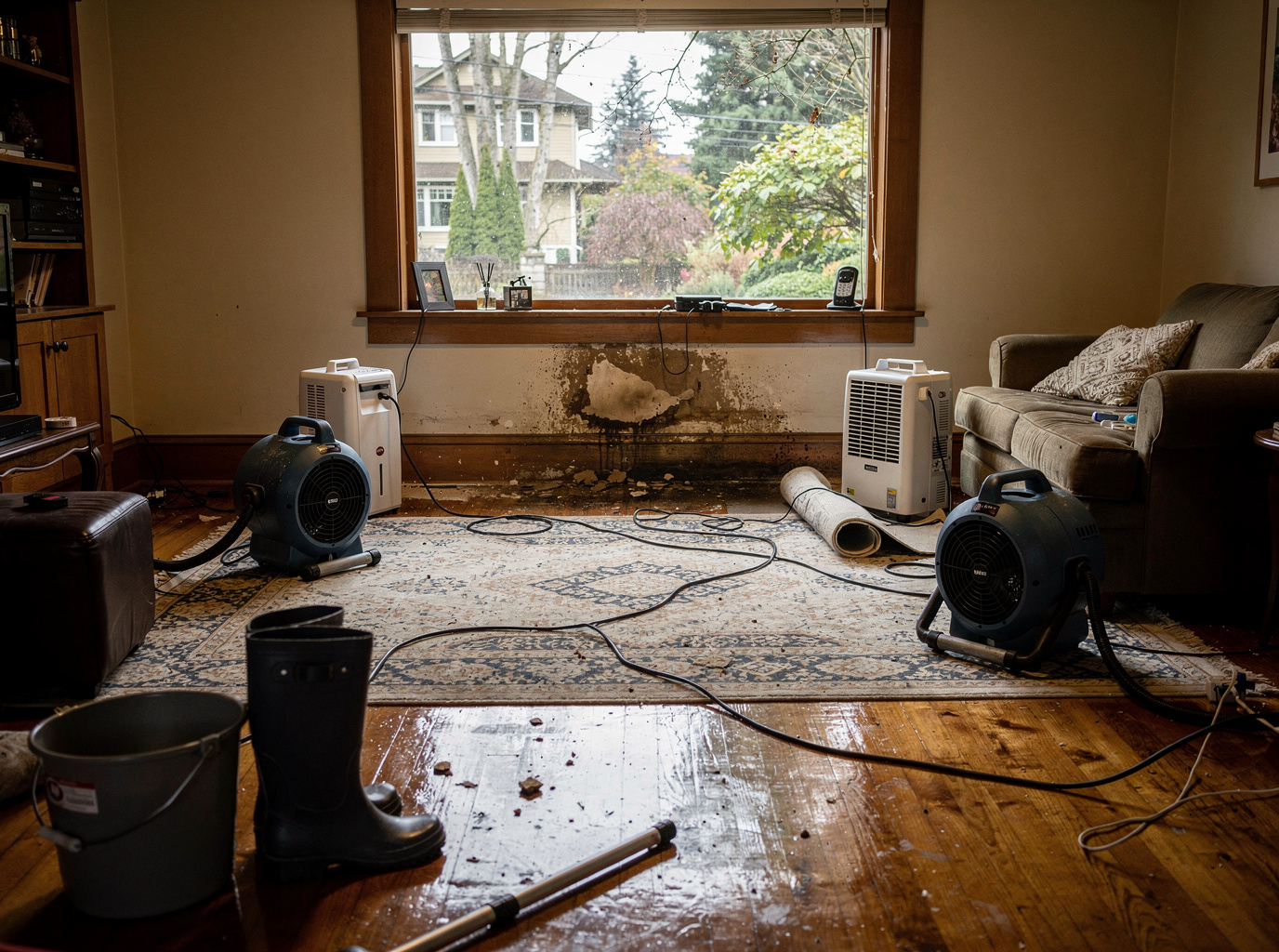
Pipe bursts in Fremont and Wallingford typically require 48 to 72 hours of continuous drying with industrial equipment once water is shut off and standing water is removed. Seattle's mild wet winters and frequent overcast skies slow natural evaporation, so homeowners must rely on targeted airflow and dehumidification rather than open windows. Older homes in these neighborhoods often feature galvanized steel pipes from the 1940s through 1960s that corrode from the inside, creating pinhole leaks that go unnoticed until pressure drops or ceilings stain.
Why Pipe Bursts Happen More in Fremont and Wallingford
Fremont and Wallingford sit on glacial till soils that shift slightly with seasonal moisture changes common across King County. This movement stresses rigid copper and galvanized lines in crawl spaces and basements of 1920s to 1950s bungalows. Dry summers followed by sudden November rains cause temperature swings that expand and contract joints, especially where pipes run near uninsulated exterior walls. Many two-story homes in these areas have supply lines routed through exterior walls facing prevailing winds, increasing freeze risk even though Seattle rarely sees deep freezes. Homeowners who notice reduced water pressure or hear hissing behind walls should shut off the main valve at the street side meter immediately to limit saturation of subfloor insulation and hardwood.
First Actions to Limit Water Spread
After locating the burst, isolate the section by closing the nearest shutoff valve rather than relying solely on the main. Remove furniture, rugs, and belongings from affected rooms and place them in unaffected areas such as the garage or upper floor. Use a wet-dry vacuum on hard surfaces but avoid plugging in electrical devices near standing water. Document the damage with dated photos for insurance purposes before any cleanup begins. In Wallingford's denser blocks near Gas Works Park, narrow lots mean water can migrate quickly into neighboring foundations, so alerting adjacent property owners early prevents disputes later.
Professional Drying Methods That Work Here
Technicians place air movers at 45-degree angles along baseboards to create a vortex that pulls moisture from plaster and lath walls common in Fremont Victorians. Desiccant dehumidifiers are preferred over refrigerant units during Seattle's cool, humid winters because they continue extracting water when indoor temperatures stay below 65 degrees. Moisture meters check behind baseboards and under vinyl flooring every 24 hours until readings drop below 12 percent on wood substrates. In homes with slab-on-grade construction near the Fremont Bridge, perimeter drilling may be needed to insert injection ports for drying beneath concrete. These steps tie directly into broader Water Damage Restoration protocols used across the city.
Preventing Mold After the Initial Dry-Out
Once visible water is gone, hidden pockets in wall cavities and under cabinets can still support mold growth within 48 hours if relative humidity stays above 60 percent. HEPA air scrubbers run continuously for three to five days to capture airborne spores stirred up during demolition of wet drywall. In older Wallingford homes with balloon framing, cavities run uninterrupted from basement to attic, allowing moisture to travel vertically and affect multiple stories. Homeowners should avoid closing doors between rooms during this phase because it traps humidity. For additional seasonal context, see how similar moisture issues arise from Handling Water Intrusion from Seattle Winter Rains in Ballard Homes.
When to Bring in Restoration Help
If the affected area exceeds 100 square feet or water has reached electrical outlets, contact a restoration team rather than attempting DIY drying. Crews from local companies arrive with truck-mounted extractors capable of removing 50 gallons per minute and can set up containment barriers to protect unaffected portions of the home. Service is available Mon–Fri 8am–6pm and Sat 9am–2pm from their base at 309 S Cloverdale St C17, Seattle, WA 98108. This approach aligns with Emergency Water Removal standards used for sudden failures in older King County neighborhoods. Prompt professional intervention keeps secondary damage from spreading into adjacent areas such as Capitol Hill or the University District.