2026-11-08 · Evan Brooks
Local Flood Risks Near the Duwamish River and Georgetown
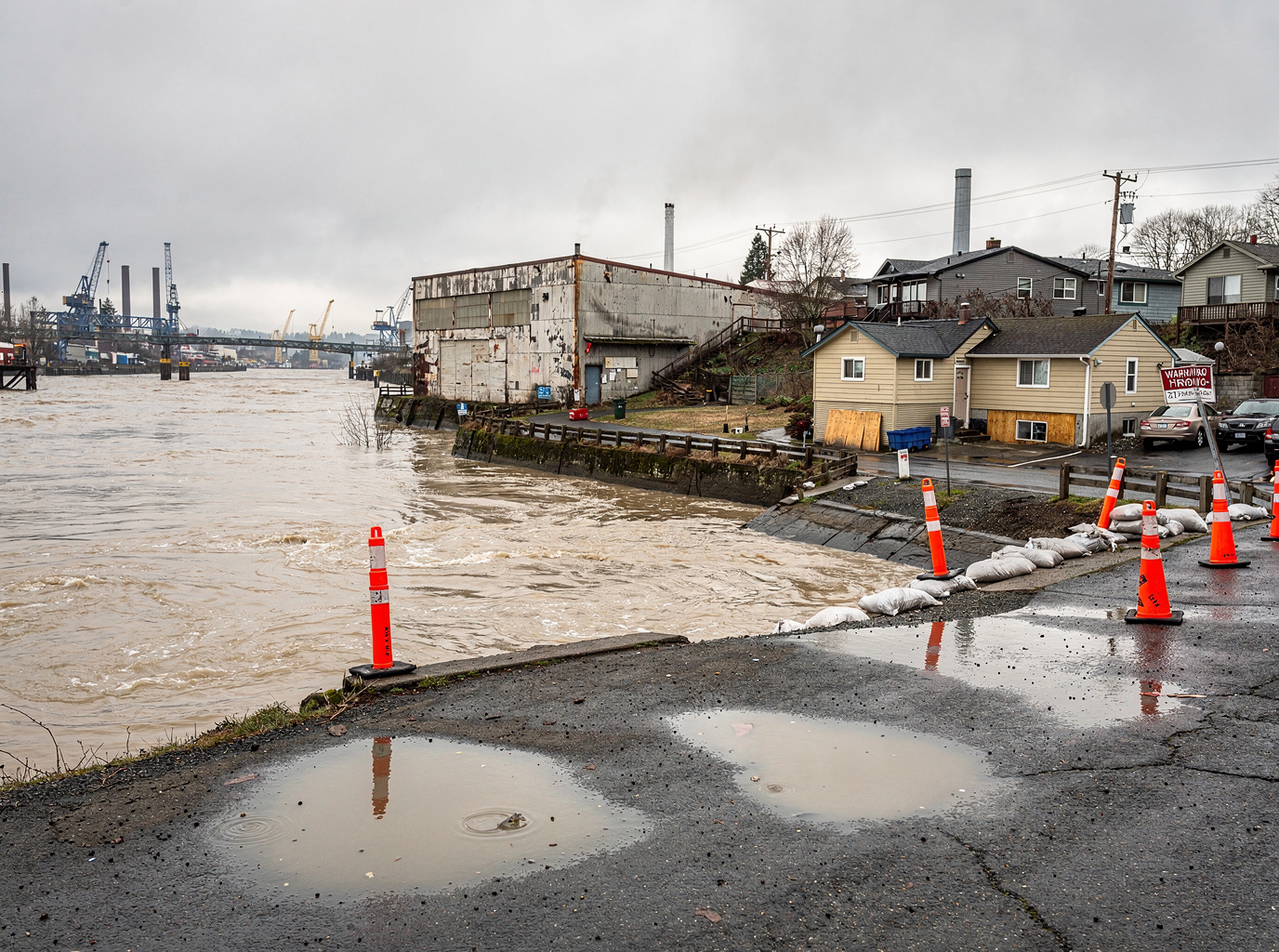
Flood risks near the Duwamish River in Georgetown center on winter rainfall combined with tidal backflow that can push water 2–4 feet above normal banks in low-lying blocks. These events occur most often from November through February when mild but persistent rains saturate the ground across King County.
Historical Flood Patterns in the Duwamish Valley
The Duwamish River corridor through Georgetown has seen repeated inundation tied to both river stage and Puget Sound tides. Industrial fill placed decades ago created flat zones where water pools rather than drains quickly. Properties along East Marginal Way and near the 1st Avenue bridge corridor record the highest repeat incidents because storm drains back up when river levels rise. Overcast skies and steady drizzle keep soils saturated for weeks, so even moderate rain events produce noticeable sheet flow across streets and parking areas. Operators who have worked these blocks note that basements and crawl spaces in 1940s–1960s buildings take on water first because original foundations lack modern perimeter drains.
Impact of Seattle's Wet Winters on Georgetown Properties
Seattle's mild wet winters deliver frequent light rain that accumulates faster than the combined sewer system can handle in Georgetown. When the Duwamish rises, water enters through alleyways and loading docks rather than dramatic overbank flooding. Older brick and wood-frame structures common in the neighborhood absorb moisture through porous walls and floors, extending drying times compared with newer construction. The same weather pattern that keeps Discovery Park trails muddy also keeps Georgetown alleys slick and low spots flooded for days after the rain stops.
Terrain and Soil Conditions That Change the Job
Flat industrial terrain and compacted fill soils slow natural drainage around the Duwamish. Water that reaches the surface tends to move laterally until it finds an opening into a building or a storm inlet. In contrast, sloped blocks closer to Beacon Hill shed water more readily. Crews responding to Georgetown calls often encounter standing water that must be pumped before extraction equipment can reach hidden pockets under concrete slabs. The combination of tidal influence and poor soil percolation means dehumidification and air movement must continue longer than in upland neighborhoods such as Queen Anne or Ballard.
Practical Assessment Steps for Property Owners
Walk the perimeter after heavy rain and note any water marks on exterior walls or doors. Check floor drains and cleanouts for reverse flow. Document the height of any standing water with dated photos to help restoration teams plan equipment placement. Properties within two blocks of the river should review King County flood maps before major renovations because elevation changes can affect insurance requirements. When water enters living or work spaces, prompt removal followed by targeted drying prevents hidden mold growth behind walls and under flooring.
For detailed guidance on handling winter rain intrusion in similar Seattle neighborhoods, see Handling Water Intrusion from Seattle Winter Rains in Ballard Homes. When active flooding occurs, emergency water removal crews familiar with Duwamish conditions can stage pumps and extractors before tides turn again. Full water damage restoration addresses both the immediate extraction and the extended drying needed in Georgetown's older building stock.